

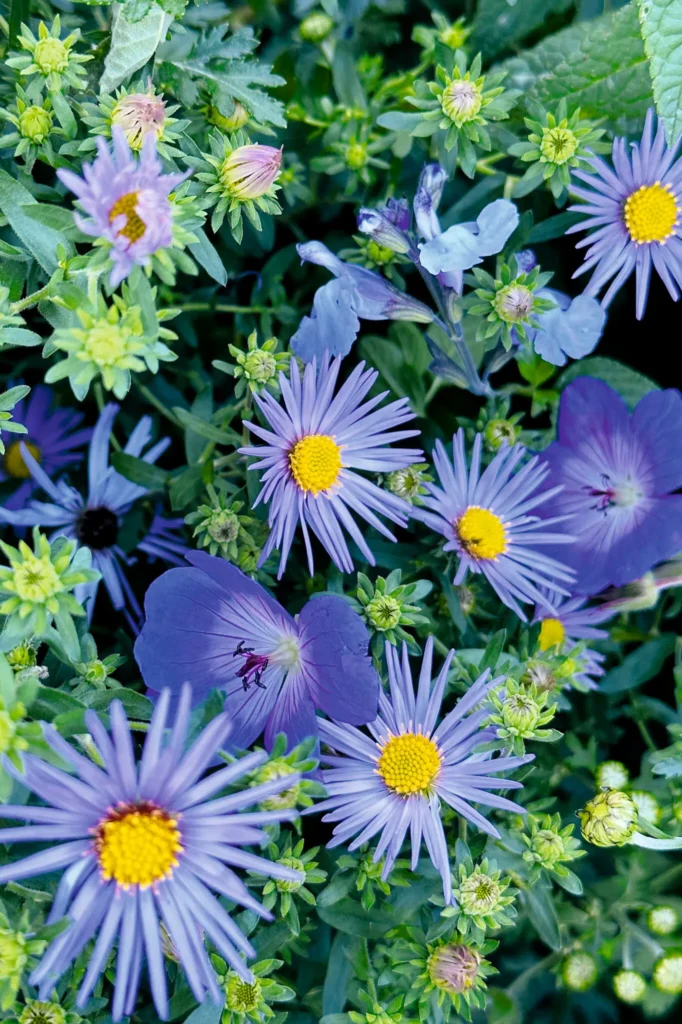
Speaking as a gardener who has admittedly incited a clash or two, Stephen Orr describes himself as “someone who thinks there are no bad colors, only colors used badly.”
He’s been there, done that, but not for lack of careful planning. The artistic challenge of “color-scheming,” as he calls it, can put any gardener to the taste test, that oh-so-subjective judgment call hanging over every move we make in garden-making:
Will it look good, and (shudder) what will visitors think?
The use of color in the garden is one of the topics that Mr. Orr, former editor in chief of “Better Homes & Gardens,” tackles with a welcoming balance of expertise and humility in his latest book.
“The Gardener’s Mindset: Connecting With Nature Through Plants” is a collection of essays, owing not incidentally to the fact that when learning to garden, it was in books of essays, not how-to volumes, that he found the most guidance — reassurance?— including on matters of color. Voices he credits for shared wisdoms include Thalassa Cruso, Vita Sackville-West, Henry Mitchell and Louise Beebe Wilder.
Mr. Orr and his husband, Chad Jacobs, are commencing their fifth growing season on Cape Cod — their fourth garden, and most ambitious.
It is not as easy to correct clashes as it was back when they gardened in pots on a city rooftop in Chelsea, he acknowledges. Then, any disharmonious element could simply be lifted out of the mix and relocated, and the remaining containers regrouped.
Now near-misses require a shovel to remediate, like his painstakingly mapped-out spring 2024 bulb display. There were to be three distinct moments over three months, each clearly visualized in his mind’s eye, he said: “A group of early bulbs — hyacinths, crocuses, puschkinias, squills — and then the next group, daffodils of all sorts, and then the next group, tulips, right?”
Or not.
Mr. Orr was short on firsthand tulip experience, since his two previous in-ground gardens had been in deer country. Deer don’t visit this garden, so at the first opportunity he’d conceived a lavish display of extravagantly colored tulips in mauves, maroons, dark purples, pinks, lime greens and oranges.
Yes, “the procession of spring flowers is daffodils and then tulips,” he said — but neither genus observes a precise start date or a hard stop, a factor he’d missed in his tulip mania.
Bright yellow daffodils were still in bloom in the bulbs’ shared space at tulip time, “and it just looked terrible,” he said.
Those daffodils? They have since been banished from the tulip beds to the backyard, “where they can be as yellow as they want to be,” he writes.
Mr. Orr enforces no property-wide color scheme, but follows a guideline: “I want each visually connected area to have a cohesive relationship,” he writes. (Alternatively, “garden separators,” he said, like hedges and walls, come in handy.)
When people say “I love color,” he replies, “Yes, but why don’t we focus a little bit?” There can be too much of a good thing.
But things can also be dull. Grouping cool colors separately from warm ones can yield good results, he said, but “it can get a little boring.”
Mr. Orr shared some ways of thinking that have helped him find his color way.
- Credits: The New York Times
- Author: Margaret Roach
- Photo: Stephen Orr