
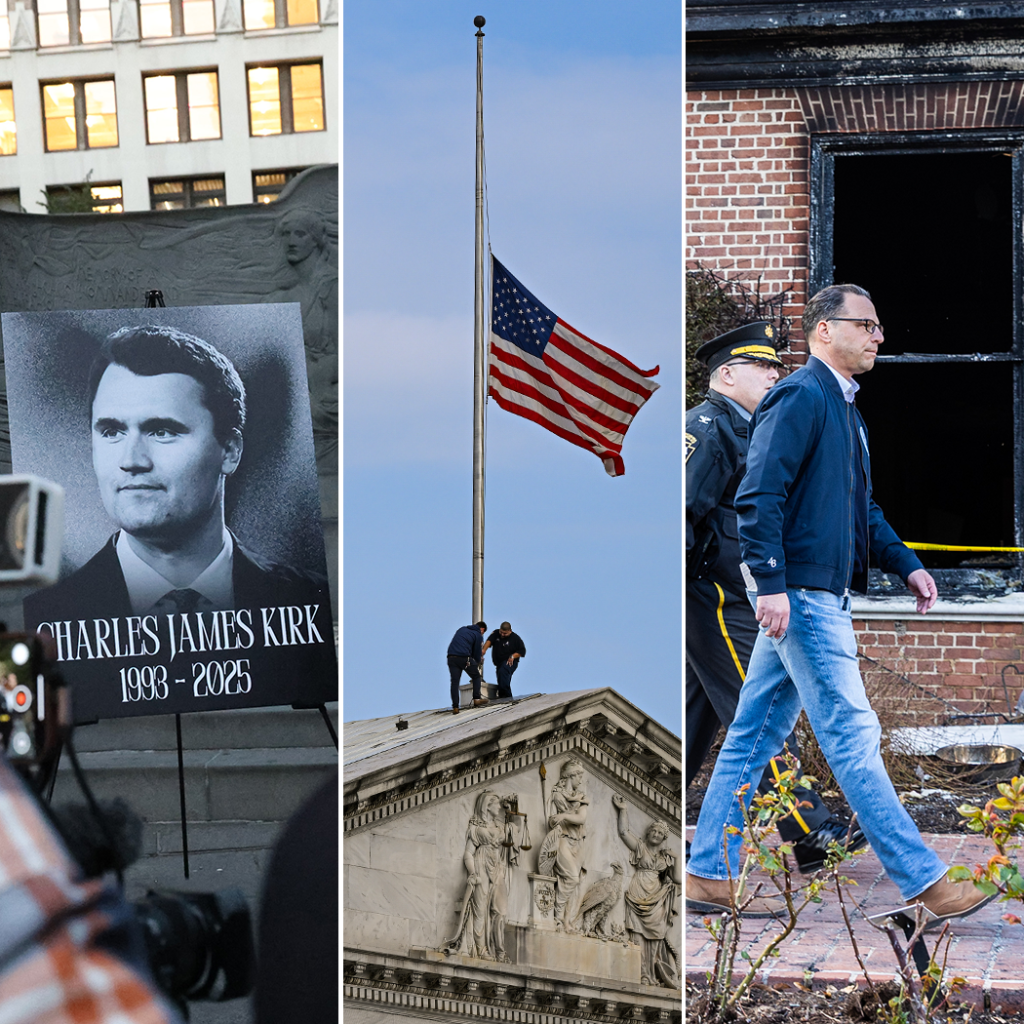
We’re living in what can feel like a scary, chaotic moment. There have been three attempts on Donald Trump’s life (not counting plots disrupted before they got far enough for an attack).
Last year, gunmen killed Charlie Kirk, the right-wing activist, and Melissa Hortman, a Democratic state legislator in Minnesota. One man firebombed the Pennsylvania governor’s house. Another broke into Nancy Pelosi’s home and attacked her husband with a hammer.
Has the United States entered a new phase of violent extremism? Sabrina Tavernise, who covers our political life, wanted to find out. She spoke with Sean Westwood, a scholar who tracks acts of political violence and how Americans react to them. Here’s part of their conversation.
Sabrina: Is political violence worse now?
Sean Westwood: If we are looking at the period from 1865 to 1901, three of the nine presidents were assassinated. A comparable rate today would mean that we would have lost two or three sitting presidents since the late 1980s. It’s also the case that in the ’60s and ’70s, there were the assassinations of Martin Luther King Jr., John F. Kennedy and Robert Kennedy, and days with multiple bombings by radical domestic groups. That’s just not what we’ve seen in the last two decades.
What does that tell us about the country now?
We should be certainly very worried about political violence and its destabilizing effect, but the country has seen far worse and survived. Part of our doom loop is not necessarily the political violence itself, but the narrative of democratic collapse that comes along with it. And history tells us that isolated incidents of political violence — even the assassination of elected officials or presidents — do not lead to the end of the Republic.
How is political violence today different from the 1960s? Are the perpetrators themselves different? For example, Cole Tomas Allen, the man who was charged in the latest assassination attempt — put him in historical context.
In the 1960s and ’70s, attacks largely came from organized groups like the Weather Underground and the Black Panthers. There was structure, there was coherence, there was leadership. Today, there just aren’t networks premised on spreading violence across the country.
The individuals who commit these acts are lone wolves. Largely mentally ill, largely male, largely younger.
The thing that seems to connect them is not ideology — it’s anger. A really good example is Thomas Crooks, the first one to try to assassinate President Trump. He was searching for candidates on both sides of the aisle. He just seemed to be lashing out against society. So in that way, Cole Tomas Allen is a bit of an outlier because he did provide a clear explanation for his actions.
But could political violence affect the stability of the country?
The number of incidents of political violence is small — a couple of dozen, maybe three dozen incidents over the four years ending in 2024. But over the same period, we’ve had more than 9,000 religious hate crimes — about 5,700 were antisemitic — and more than 25,000 racial hate crimes.
I would strongly argue that it’s these other cleavages, these other acts of violence, that are hurting us.
- Credits: The New York Times
- Author: Sam Sifton