

To reach the Cloisters, the museum of medieval art in Upper Manhattan, you climb a wooded hill in Fort Tryon Park, the sounds of the city receding as you go. I had forgotten about the hill, about how one minute you’re on Broadway and the next you’re following switchbacks through the trees, transported to somewhere else — a hiking trail? a fairy tale? — a world away from sidewalks and subways.
I was at the museum because friends who were in from out of town wanted to go, and I was more than happy for a reason to visit the unicorn tapestries. Guests compel one to do things one wouldn’t normally do on a Saturday.
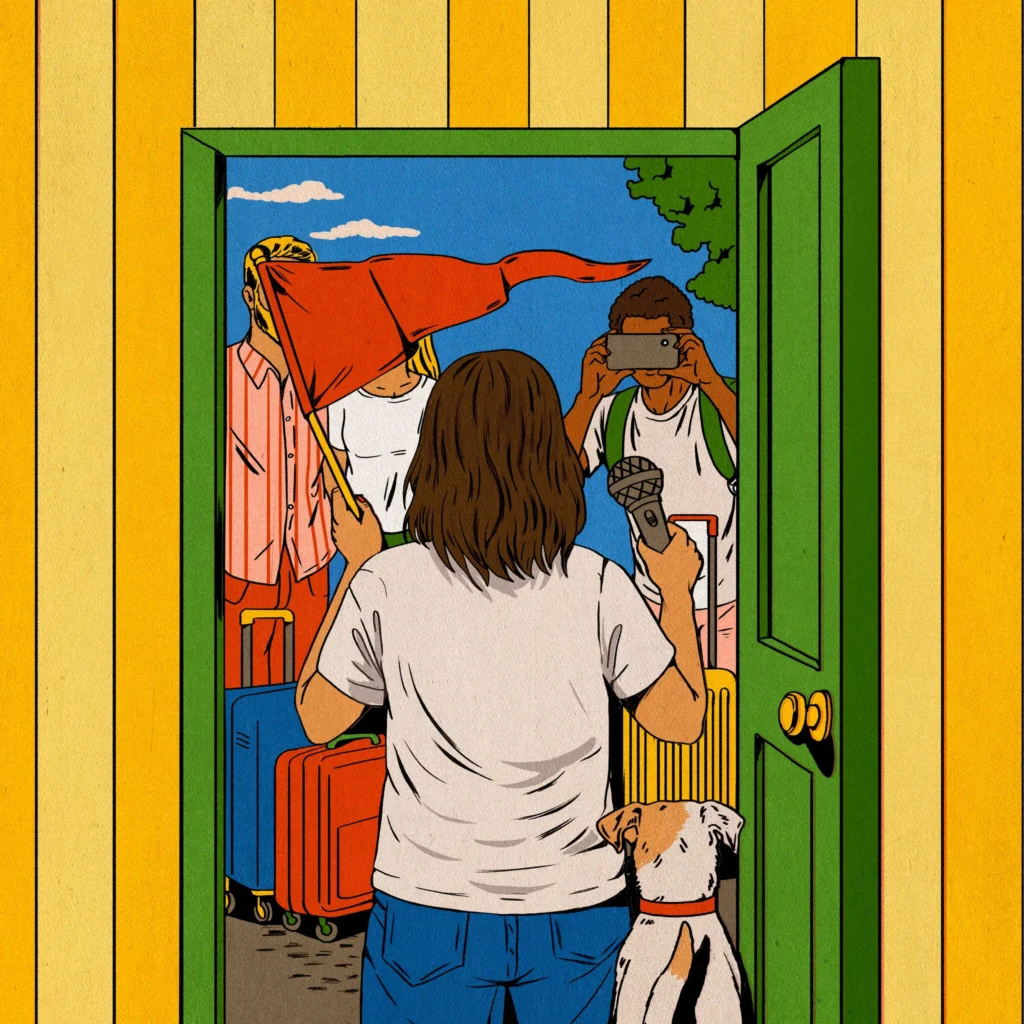
Even if you don’t live in a metropolis, the presence of houseguests turns your hometown into a tourist destination. Places that have come to feel ordinary become essential: Here’s where you get a local delicacy, this is the best spot to see the sunset, grab tickets to the theater or the aquarium or some other place we actually never go. There are guests here! We must show them a good time!
If you’re feeling bored or jaded, visitors can remind you of what’s good about your life. Playing the role of temporary booster, while exhausting, inevitably snaps one out of the doldrums. I’d been sort of dragging myself through the never-ending late winter when my friends arrived, and they were excited not only to see the city, but also to see me, to see where and how I live.
As my colleague Steven Kurutz wrote once: “Houseguests, love them or hate them, reflect ourselves back to us. They allow us to communicate our values to others and show off.” Mundane activities, like a trip to the pharmacy or my morning coffee routine, took on a new luster when I had an audience.
The days felt more full when my friends were here, not just because they’re good company, but also because I was determined that they not waste their limited time in town. We planned out itineraries for each day, packing in more steps and meals and meet-ups than I typically do in a month.
Naturally, when visitors leave, things equalize. But I’ve been thinking about how to maintain some of that excitement, some of what Kitty Florey called, in a 1983 Times story, that “pleasant temporary madness to the scheme of things” that guests bring.
Before my friends arrived, I deep-cleaned the house. I finally mailed a bunch of packages that had been waiting to go to the post office. Did I iron the bedsheets, as if I was performing turndown service in a luxury hotel? Perhaps! Was this a little much? Perhaps it was! But I wanted things to be nice. Why did it take out-of-town guests arriving to get me to make things nice? A friend once told me whenever she doesn’t feel like cleaning the house she invites people over for dinner, and next thing you know she’s spit-polishing the drinking glasses.
Most of us don’t make itineraries of fun for our weekends; we make to-do lists. In his book about overcoming procrastination, “The Now Habit,” Neil Fiore endorses scheduling recreation before you schedule work, “beginning with an image of play and a guarantee of your leisure time, so you know you’re not procrastinating on having fun and living fully.” I like this model. I hadn’t been to the Cloisters in decades, not because I didn’t want to go, but because I didn’t think I had the time. I reflexively privileged work to be done over things I’d like to do.
The density of activity that one packs into hosting guests, or when taking a vacation, is predicated on urgency — we have limited time so we need to do as much as we can over the next four and a half days. Can you generate the same feeling if you pretend you’re moving away in a week’s time? If you knew you were leaving town, you’d make a reservation at that seafood place you’ve been meaning to try, you’d finally go to pub trivia night. It’s a milder form of “memento mori”: When we remember that life is finite, it sharpens our attention. We identify what matters and prioritize it.
I didn’t expect a visit from an old college pal to occasion a meditation on mortality, but living as fully and deliberately as one does when trying to show others a good time has a way of exposing the ways in which one’s regular life is lacking, how much time gets wasted. Maybe I’ll get out the iron and press my own sheets. Maybe I’ll leave a chocolate on my own pillow tonight.
Good ideas
One reader suggested taking a photo a day as sort of a diary. Another texts the person who gave her a gift every time she uses it. I’ve been getting wonderful ideas for increasing joy since my new newsletter, The Good List, launched a couple weeks ago. If you haven’t subscribed, you can do so here and it will be in your inbox on Wednesday.
- Credits: The New York Times
- Author: Melissa Kirsch
- Image: María Jesús Contreras