
For five years, the New York State Health Department has been locked in battle with three tiny Amish schools upstate. The dispute: whether students must be vaccinated.
Amish families say that New York’s immunization rules, which allow no religious exemptions, threaten their religious freedom and way of life. The state insists that unvaccinated children — which would include most of the students at the three schools — must be barred from the classroom.
In a petition filed on Sept. 28, the Amish asked the U.S. Supreme Court to force New York to grant religious exemptions to immunization rules, as most states do. A previous ruling gave the Amish reason to think they might have a chance at prevailing.
But then a wave of measles cases began sweeping through Amish communities. Gov. Kathy Hochul declared a statewide health emergency this month after more than 100 people fell ill with measles.
“Perhaps Mother Nature, by delivering a measles outbreak in New York’s Amish community coincident with this case returning to the Supreme Court, is her not-so-subtle hint,” said Dr. Howard Zucker, who was state health commissioner when New York eliminated religious exemptions.
But many Amish families regard vaccine mandates — and government intrusion in their schools — as a greater threat to the health of their community than measles. Their religion calls for adherents to live together in tightknit religious communities apart from the modern world and its influences.
“Our almighty God wants us to fully put our faith and trust in him, which is in conflict to put our trust in vaccines,” Ezra Wengerd, an Amish leader who represents the 26 families that send their children to the three schools, told a judge in 2022.
Measles is on the rise across the United States. More than 4,400 cases have been reported this year. The Amish have been hard hit, although they are far from the only group affected.
The clusters of cases in New York appear linked to larger outbreaks in Amish communities in Ohio and Pennsylvania.
In New York, most of the cases upstate appear to have been in Amish and Mennonite communities, according to interviews and local news accounts. Health officials have been reluctant to say so outright, they acknowledged, for fear of stigmatizing those communities.
“It’s in rural New York — that’s what’s important,” Dr. James McDonald, the state health commissioner, said in a recent interview.
One county health official, Dr. Kevin Watkins of Cattaraugus County, confirmed during a county health board meeting that most cases in upstate New York were clustered “within Plain communities,” a name used to describe Amish and Mennonite groups that emphasizes the unadorned nature of their clothing and lifestyle.
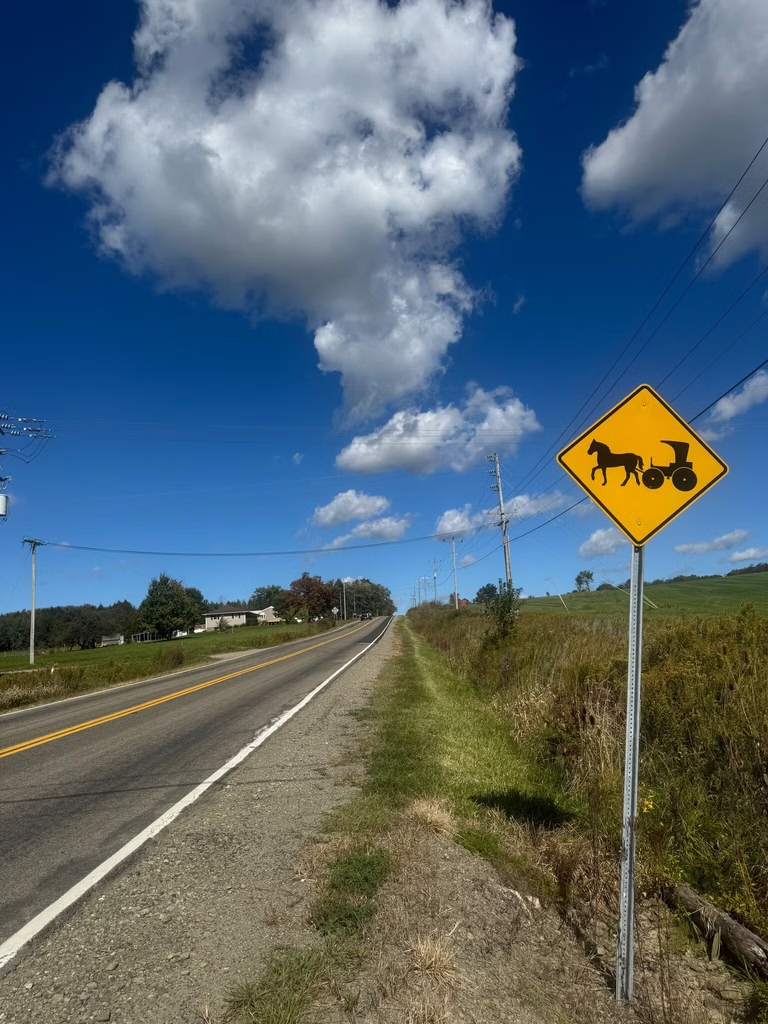
More than 20,000 Amish residents live across upstate New York, from the westernmost corner to the North Country region. Signs of the outbreak are not tough to find.
In Chautauqua County, in Western New York, one man said that the renovation of his son’s home had been halted for three weeks because several Amish workers got sick with measles.
Two childhood doses of the M.M.R. vaccine — which protects against measles, mumps and rubella — can confer lifelong immunity.
The disease had been declared eliminated in the United States a quarter-century ago but has been resurgent amid declining vaccination rates.
Some families worry that the M.M.R. vaccine causes autism, though studies have repeatedly debunked that claim. And Robert F. Kennedy Jr., the U.S. secretary of health and human services, has sown doubts about the safety of vaccines.
David Leslein, a 33-year-old furniture maker who is Amish, said that his seven children were vaccinated against tetanus but had not received the M.M.R. vaccine because he feared they would be stricken by terrible side effects.
For years, many Amish children had religious exemptions to New York’s school immunization requirements, which require a slew of shots, including the M.M.R. vaccine.
But in 2019, schools emerged as a major locus of transmission during a measles outbreak in ultra-Orthodox Jewish communities. At the time, more than 26,000 students in the state had religious exemptions from being vaccinated.
Hoping to prevent future outbreaks, the state eliminated the exemptions. In doing that, New York became an outlier, with stricter school vaccination rules than those in 45 states.
Some Amish educators appear to have learned of the change two years later, when state health inspectors contacted them to inquire about their schools’ compliance, according to court documents.
When inspectors arrived at one schoolhouse, only one of 24 children had the required vaccination paperwork on file. Some of the children had paperwork indicating they had received some vaccines, but not others.
But Mr. Wengerd, who represents Amish and Mennonite schools in their interactions with state government, said that most Amish families he knew did not vaccinate their children for religious reasons, according to an affidavit he filed in court. He noted that the 26 families who sent children to the three schools had a total of 168 unvaccinated children.
“None of these 168 children have any diagnosed medical condition or any other health condition that arose or occurred after they were born,” he said.
The inspections led to hefty fines, as much as $2,000 per student, a huge sum for one-room schoolhouses that receive no public funding. By 2022, more than two dozen Amish and Mennonite parents had signed a declaration, beseeching the state to let them run their schools without interference.
“We, as a peace-loving religious group, are sincerely sorry that we are causing the state a prob.,” the handwritten declaration said. It explained that they cherished their religious freedom and the opportunity to raise children free of worldly influences. The vaccine requirement interfered with that. “If we honestly obey this, then it will affect everything we do, yes even in the way we try to remain healthy.”
The tone was humble, but firm. If pressed, the letter warned, Amish residents might leave. “We love our state of N.Y. + have no desire to move out,” the letter stated.
The letter did not sway the judge who was reviewing the Health Department’s evidence against the three schools, all located in Montgomery County, to the northwest of Albany. The fines, $118,000 in all, were upheld.
The Amish then sued in federal court, claiming that the Constitution entitled them to religious exemptions.
While declining to comment on the litigation, the state Health Department said in a statement that “New York’s school immunization requirements are based in science and protect the health and well-being of all New Yorkers.”
Federal courts have generally sided with public health arguments rather than with those citing individual liberty in vaccine cases, going back more than 100 years when smallpox remained a threat.
The Amish lost twice in federal courts, with a panel of appellate judges concluding that religious exemptions would result in “clusters of low vaccination rates.”
In December, the Supreme Court unexpectedly revived the case, instructing the lower courts to re-examine the Amish lawsuit in light of another recent ruling. That case, Mahmoud v. Taylor, was brought by parents who wanted to withdraw their children from public school classes when books with L.G.B.T.Q. themes were discussed.
The Supreme Court concluded that requiring the children to participate in the lessons violated the parents’ rights to direct the religious upbringing of their children.
After suffering another adverse ruling in June, the Amish have now again asked the Supreme Court to intervene.
The Supreme Court accepts only a small fraction of appeals, but there is a much stronger chance it will take up this case, given its prior order, legal experts say.
Brad Hoylman-Sigal, the former state senator who led the effort to eliminate religious exemptions in 2019, said that the ongoing outbreak should give the Supreme Court pause. “It would be outrageous given the current state of emergency in New York for the Supreme Court to undo a health mandate that has effectively staved off measles outbreaks,” said Mr. Hoylman-Sigal, who is the Manhattan borough president.
A lawyer for the Amish, Hiram Sasser, said that the Supreme Court should not consider the current measles outbreak if it decides to take the case.
There is a strong constitutional tradition, he said, of exempting people from government mandates on the basis of religious beliefs.
Mr. Sasser is a lawyer at First Liberty Institute, which has a track record of winning religious liberty cases before the Supreme Court. He said that his goal was not to drive a hole through vaccine laws, but to get the court to order New York to leave the Amish alone.
“I don’t view this as a vaccine case,” he said. “I view this as a ‘Save the Amish’ case.”
If the Amish were to lose, he warned that some might depart in search of greater religious freedom elsewhere.
“We hope it won’t come to a wagon train fleeing New York, but if New York insists on these fines, and the Supreme Court does not grant them relief, that is likely the outcome,” he said.
- Credits: The New York Times
- Author: Joseph Goldstein
- Photo: Mark Sommer