

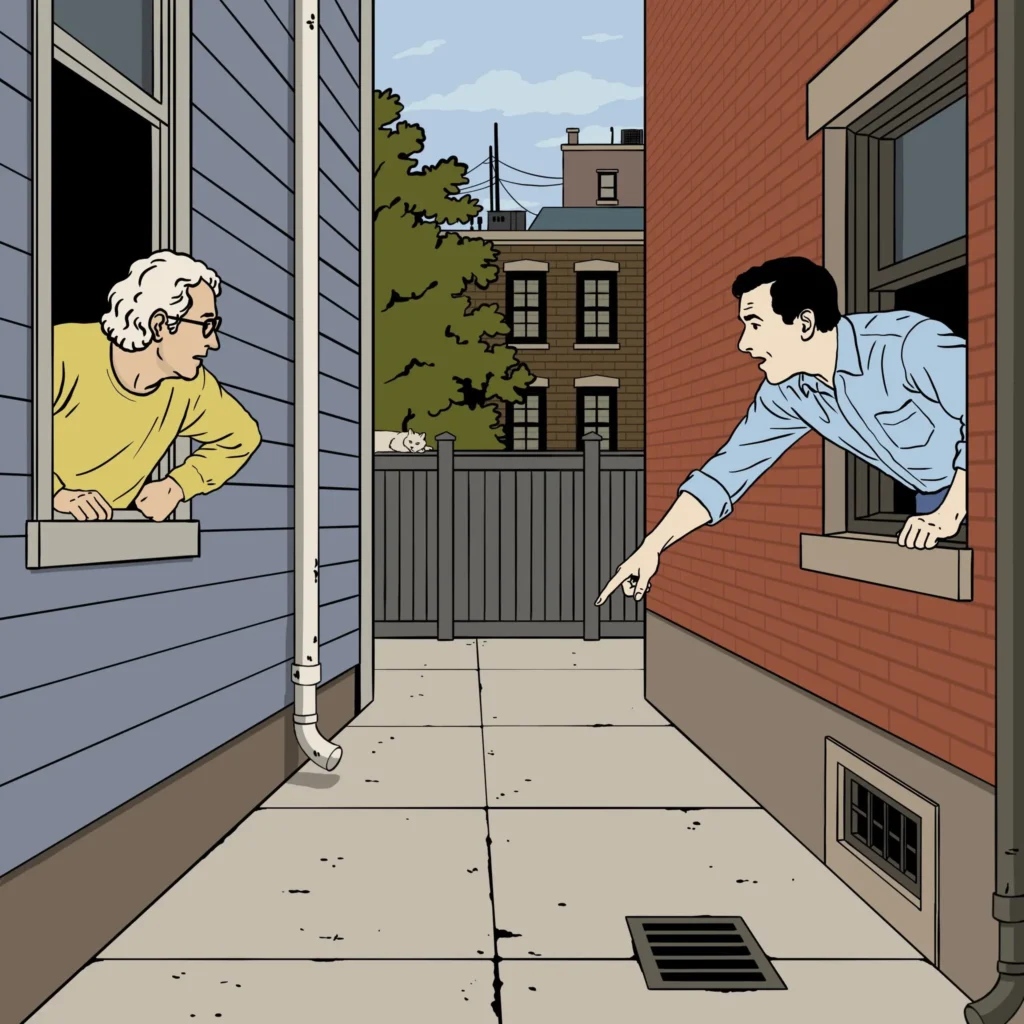
Q: I own a single-family home in New York City. The apartment building next door has an illegal unit in the basement, and we share ownership of a small paved alley. The owner next door has complained of flooding in the basement apartment because the drain to the sewer on his side of the alley isn’t functioning. He told me that he intends to block the drain, regrade our alley and redirect all the water through the alley and into the street — which will wash out our lawn. If we won’t regrade the alley with him, he will make his side higher, redirecting all the water away from the basement and toward our house. What are our rights?
A: Your neighbor cannot solve his problem by directing water onto your property, or by ignoring city laws. The city code requires owners to keep their properties in a safe, code-compliant condition, and this could arguably include the drain, said Michael Nacmias, a lawyer in Brooklyn.
To take a legal approach to this project, he would likely have to file plans and obtain permits before any work is done. This would mean figuring out whether the consent of both owners is required by checking deeds, surveys and easements, said Mr. Nacmias. If the work requires temporary access to your property and you do not grant it, be aware that your neighbor could sue you under state law, though the law does not allow your neighbor to alter your property.
Document everything. Take photos with time stamps, including the current conditions. Look at the deed or any easements to see who owns what. You can object to the work in writing, and if work begins, call 311 immediately, Mr. Nacmias said.
Depending on the scope of work and where it takes place, this conflict could at least partly be a property line dispute, which is a civil matter.
“However, even if the proposed work is fully on the neighbor’s yard, the neighbor is not allowed to change their property in a way that would cause storm water to flow onto any of the neighboring properties,” said Andrew Rudansky, press secretary for the New York City Department of Buildings.
In addition, Title 19 of the city’s administrative code requires a permit for grading, or changing the surface area, could also apply here, especially when existing drainage is affected.
On a separate note: Illegal basement apartments that flood can create fatal conditions, and should be reported to 311.
- Credits: The New York Times
- Author: Jill Terreri Ramos
- Illustration: Nadia Pillon