
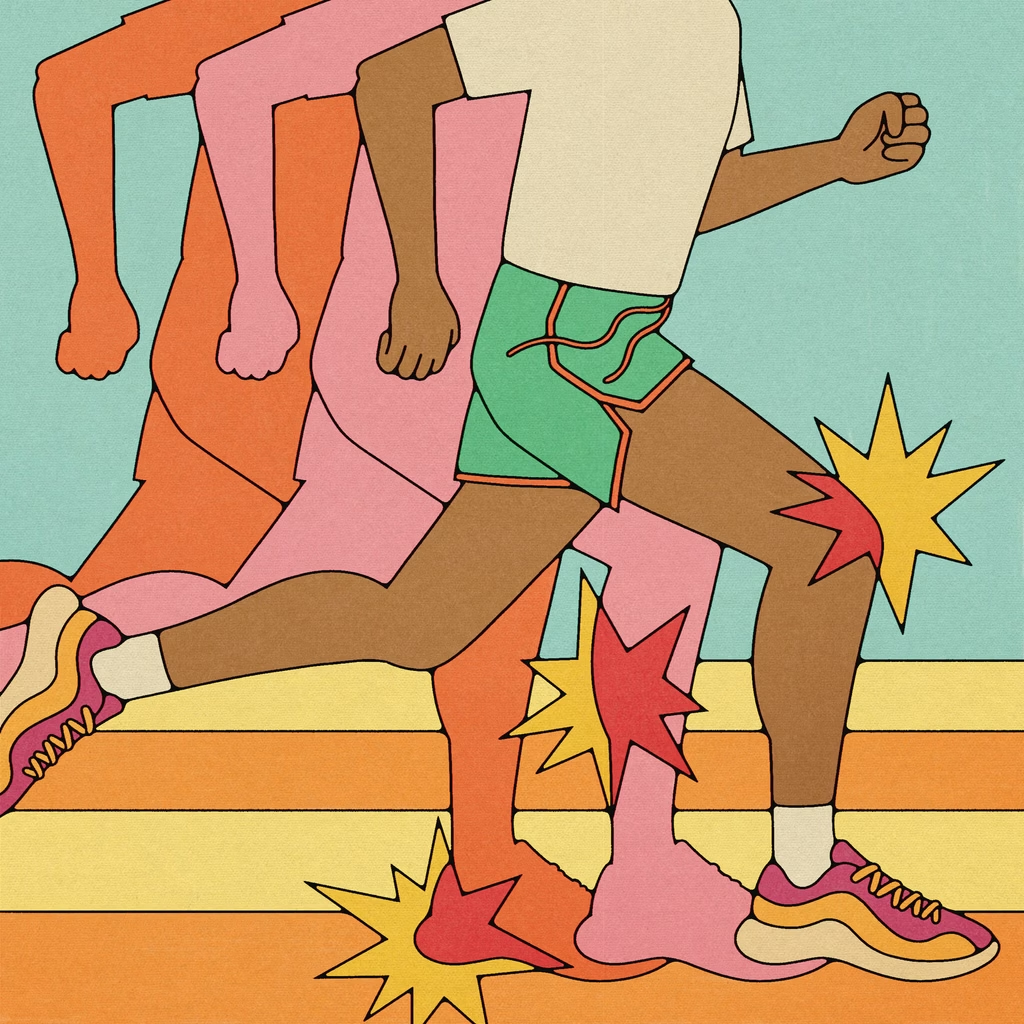
Running can benefit your cardiovascular system and your mental health. But without a few precautions, it can also hobble you with aches and pains.
“Running is really unforgiving,” said Dr. Carlin Senter, the chief of the primary-care sports medicine service at the University of California, San Francisco. “You can get away with having some weakness or injury” with some other types of exercise, she said, but because running puts so much stress on your body, there’s a greater risk of getting hurt.
A 2024 study of 1,049 runners registered for the New York City Marathon found that more than 40 percent suffered an injury while training or during the race itself.
We asked sports medicine doctors, physical therapists and coaches to share the habits they wish all runners practiced to avoid injury. Here are six strategies they swear by.
Build mileage gradually.
Many running injuries come from pushing yourself too hard, too soon.
A slow and steady training program builds your resilience and increases what your body can safely tolerate, said Stuart Warden, a professor of physical therapy at Indiana University Indianapolis.
As a general rule of thumb, avoid big jumps in training. Strive to increase your total weekly mileage by no more than 10 to 20 percent, and consider alternating hard training weeks with lighter, “down” weeks, Dr. Warden said.
If you’re preparing for a marathon, give yourself at least 12 weeks to 16 weeks of training — or longer if you’re new to running — to help your body adapt to the demands of increased physical activity, the experts said.
Keep your easy runs easy.
Training for a marathon may be intense, but not every workout should be, said Pamela Geisel, a running coach and exercise physiologist at the Hospital for Special Surgery in New York. Most of your long runs should be at a truly easy pace, she said.
“We scream it from the rooftops,” she added, but runners still struggle to slow down.
Long, easy runs are important for building aerobic endurance. They also train your body to rely on fat for energy versus carbohydrates, which can help to ensure you don’t crash when tackling longer distances.
Some runners feel pressure to push the pace when they train with a group or run club, Ms. Geisel said. Fitness apps that allow you to log and share your workouts can also make some runners feel competitive with others — or with themselves.
“That public-facing information, while it can serve as a motivator, can also put on this layer of needing to keep up with the Joneses,” she said. On easy runs, you should be able to have a conversation without gasping for air. “Like, call your mom,” she added.
Prioritize rest.
Runners should be disciplined about rest, said Becs Gentry, an elite marathoner and coach for Peloton. Rest “is massively underrated, under discussed, underappreciated in the fitness world,” she said.
Down time is important for building strength. “The magic really happens on those recovery days,” Ms. Geisel said. “We apply a stress, and then the body repairs to a greater base-line.”
It’s fine to run errands and stretch on recovery days, Dr. Geisel said, but don’t, for example, take a dance cardio or challenging Pilates class.
Prioritize sleep, especially in the two months before a marathon, when training injuries are most common, said Dr. Adam Tenforde, a sports medicine physician at Mass General Brigham. Sleep helps your muscles and bones repair themselves, and some studies suggest it can also affect performance, he said.
Strength train.
Running doesn’t by itself build a lot of muscle.
“You’d be surprised how many runners are weak,” Dr. Warden said. “They can run fast, they can run long distances, but when you actually test their strength, they’re relatively weak.”
Many running injuries stem from muscle weaknesses and strength imbalances, he said, as other muscles or tendons try to compensate and become overworked.
Strength training can help these imbalances. It can also help you run more efficiently, Ms. Geisel said.
Experts recommend focusing on the muscle groups that you rely on most as a runner: your legs and glutes, as well as your core, which helps keep you upright and stabilizes your entire body. Exercises including squats, lunges, Romanian deadlifts, glute bridges, planks and side planks can work all of these areas.
Keep your strength training plan simple, Ms. Geisel said: Pick a few exercises you enjoy, do them at least twice a week and make sure you’re continually challenging yourself by increasing the weight you’re lifting or the difficulty of your routine.
Don’t ignore pain.
Most runners have been there: You’re moving closer to your race goals, then you start to feel a persistent ache, or perhaps even a sharp jab. You hope it goes away, but it keeps coming back.
This is where serious injuries can occur, Ms. Geisel said.
“Sometimes we really try to just like pretend things aren’t creeping up,” Ms. Geisel said. But, she added, you want to address pain early on, before it changes your gait. The longer you wait, the more challenging the treatment and recovery can become.
If you have pain that persists or worsens during training, get it checked out by a sports medicine specialist as soon as possible, the experts said.
Use your fitness tracker as a tool — not a coach.
Fitness trackers and apps can be helpful for monitoring things like heart rate, distance and patterns in your health over time. But many runners lean on them too heavily, the experts said.
Running technology can’t take the complete picture into account, including hot or cold weather, uneven ground or life stresses, Dr. Tenforde said.
Some runners fixate on what many fitness trackers call a “readiness score,” which claims to determine how hard to push yourself based on how fatigued you are and how you slept. But you’re usually better off adjusting your workout based on how you feel, Ms. Geisel said. Plus, there can be value in training when the conditions seem less than ideal, she added. What if your readiness score is low on race day?
Ms. Gentry, who removes her watch as soon as she gets home from a run, agreed. “The best thing you can do for your body is to be able to hear it,” she said.
- Credits: The New York Times
- Author: Danielle Friedman
- Illustration: Hayley Watson