

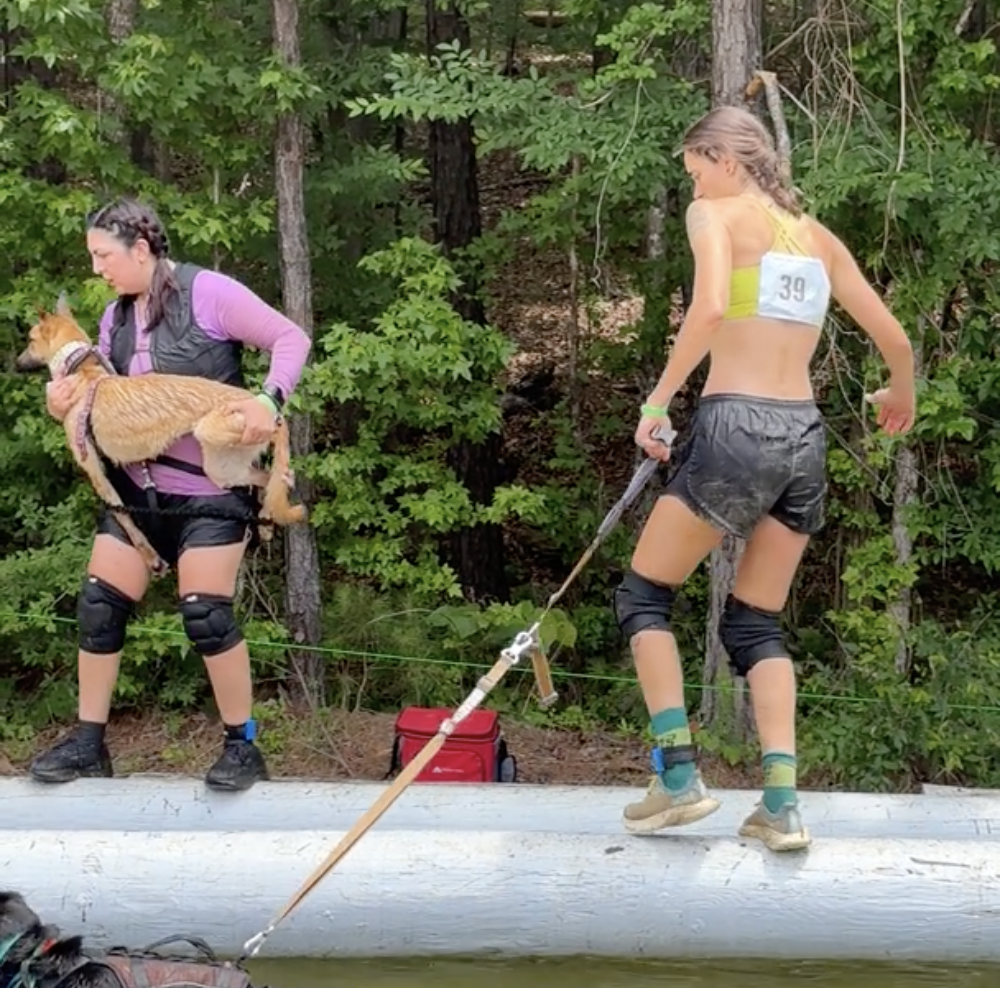
On a sunny morning in the rolling green hills of Anniston, Ala., more than 900 runners lined up with their dogs for the OneWorld Canine Obstacle Run, a race and camping festival.
When the whistle blew, each pair charged up and over mounds of sand before plunging into the first pool. Soaked pups emerged from the water, shaking off, before continuing on the roughly four-mile course, which included more than 40 obstacles.
The first few obstacles included ladders, a swaying bridge called “The Wiggler” and a shallow creek that fed into a drainage pipe, sending the dogs and their handlers straight into a muddy pool.
Then they all disappeared into the woods, where the course climbed over derelict cars, giant spools and pyramids of tires before spitting them out at the bottom of Heartbreak Hill, the race’s toughest ascent.
While some runner-dog pairs chased course records, the event attracted competitors of all levels. There were divisions for youth, military veterans, search-and-rescue personnel and participants over 60. If a team couldn’t complete an obstacle, they could step aside and take a two-minute penalty.
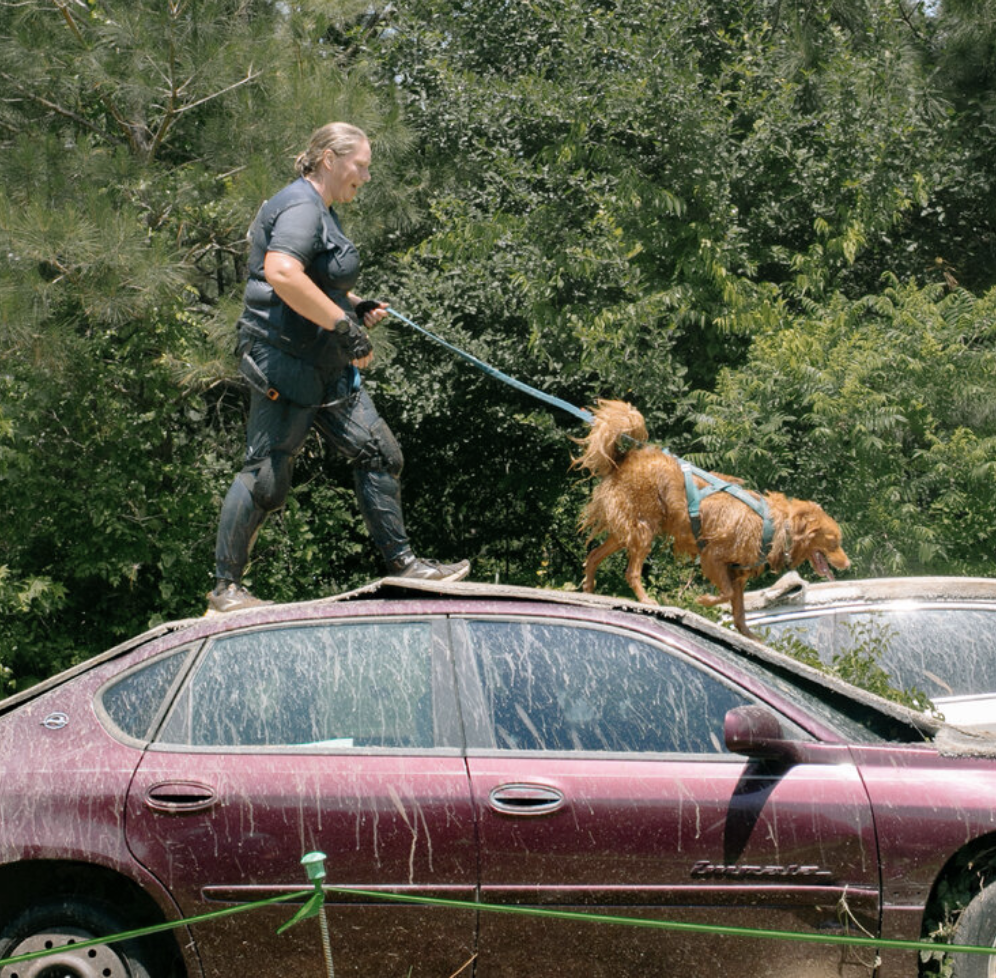
Amber Batteiger, who has worked in animal welfare and crisis response and lives in Satellite Beach, Fla., said that it’s not always the most athletic pairs who succeed. “The safest teams are often the ones willing to slow down, skip an obstacle or end their day early if that’s what their dog needs,” she said.
The breeds you might expect to see at an event like this were well represented: German shepherds, Siberian huskies, Australian shepherds, bloodhounds. A search-and-rescue cadaver dog named Dr. Phil was there, too.
But the course also attracted less obvious athletes: corgis, mini Aussies, papillons, Boston terriers.
“The dog makes the run,” Tim Malo said. “They jump over everything. I’m just dragging my old body behind them.”
Mr. Malo was recruited to race by his friend, Kathy Watson, from Sale Creek, Tenn. To prepare, Ms. Watson and her border collies, Rolex and Jack, spent three weeks dock-diving, a sport where dogs launch off a platform to chase toys in the wáter.
But when her husband declined to run with her — “because he’s sane,” she said — she asked Mr. Malo to team up with Jack.
Devon Helberg of Waco, Texas, dyed her poodle, Dolly Beth, orange in honor of this year’s neon theme.
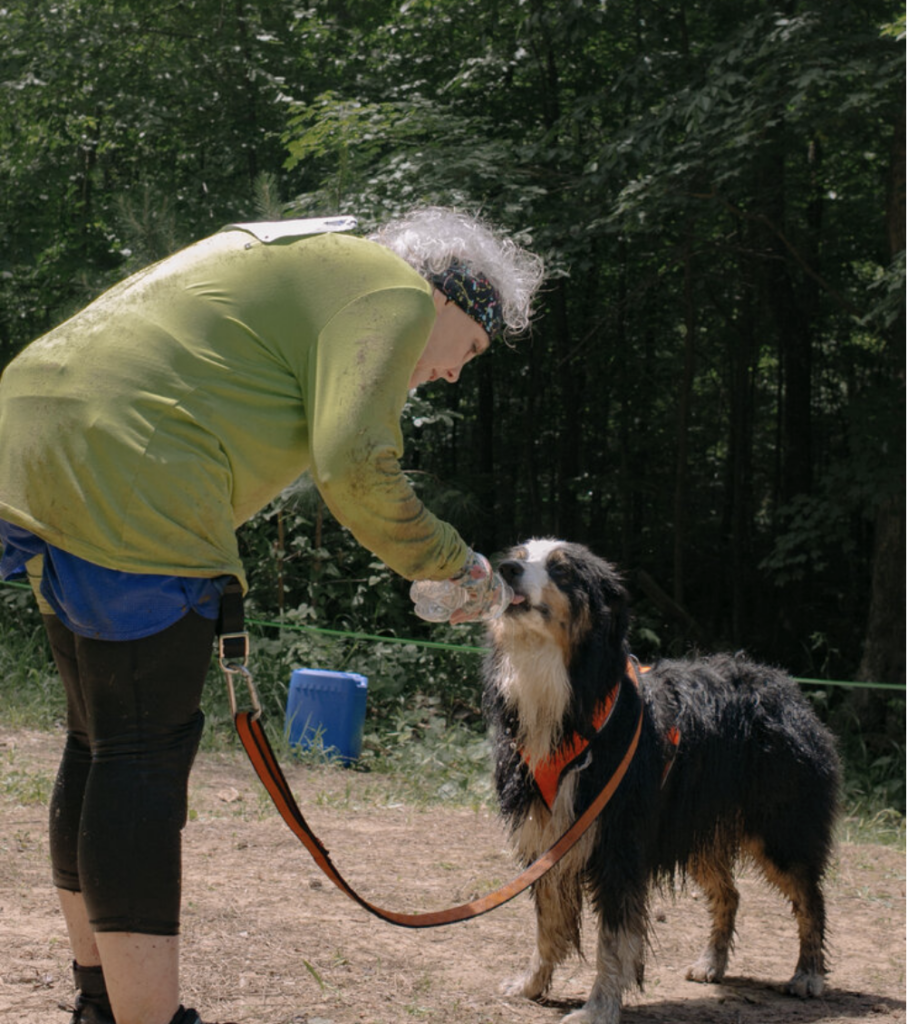
The day of the race was hot — nearly 90 degrees — so many participants took the course slowly, stopping at every water station to give their dogs a break.
Paul Hammond, the event’s director, said he keeps scheming up ways to make the race more challenging.
“This year, there’s more natural, God-made obstacles,” he said during a safety briefing before the event. “Well, I won’t call them obstacles. Hills. There’s some more hills for you guys, but I’ll let you discover them.”
Before and after the race, many participants camped together. At night, a band played and the campground filled with runners swapping stories while their dogs rested in the shade.
The winning team completed the course in 41 minutes, and the last finishers took three and a half hours.
After the race, many participants are already thinking about the next one. Morgan Weller, a professional dog trainer, has run the race five times with her search-and-rescue dogs.
“I was just addicted to it,” she said. “You get to find out how strong your dog is, how strong you are, and after the first year, I never looked at my dog the same way again.”
- Credits: The New York Times
- Author: Hannah Singleton
- Visuals: Emily Wang