
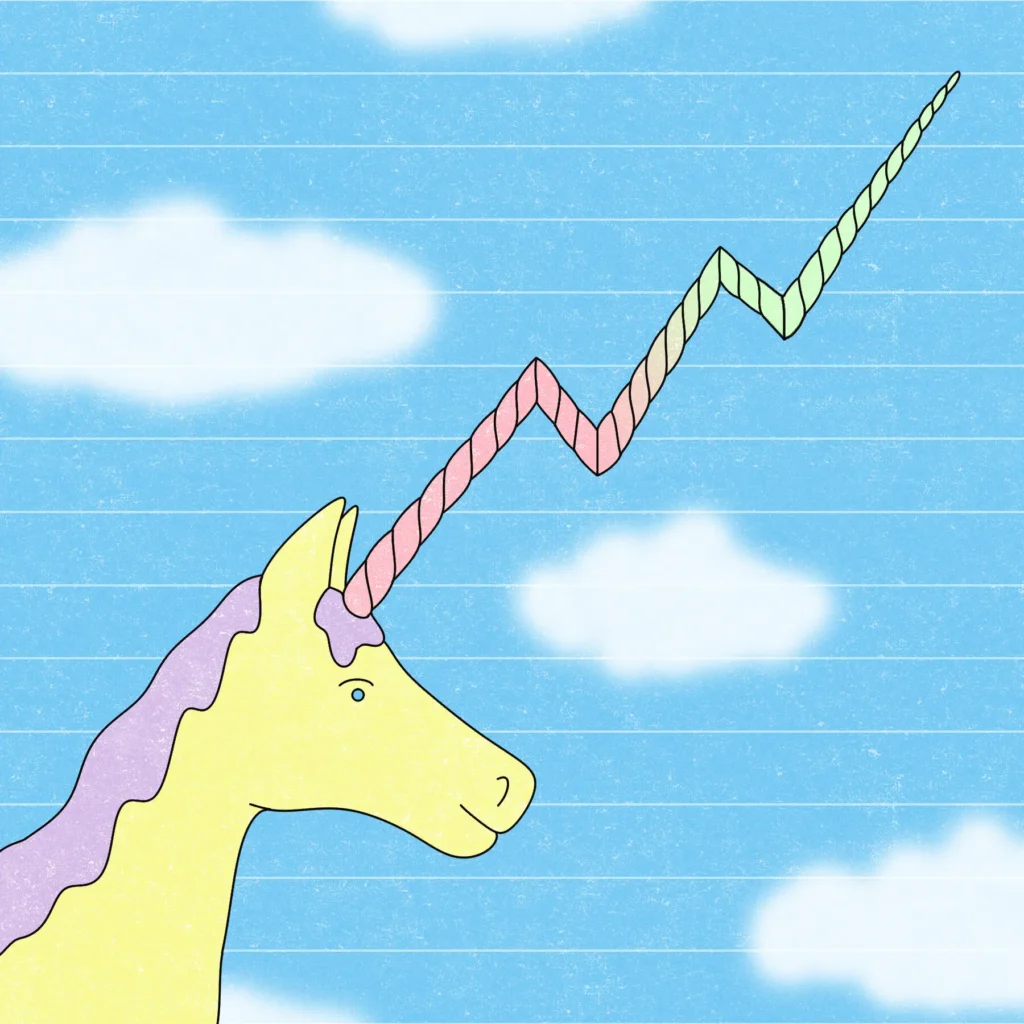
Once upon a time, becoming a “unicorn” — a private start-up worth more than a billion dollars — was a founder’s dream. The term was coined by Aileen Lee, founder and partner at Cowboy Ventures, in 2013 to signify the rarity of billion-dollar valuations at the time.
But today, more than a thousand of them exist, and the world of ’corns has broadened to include “decacorns,” private companies valued at $10 billion or more; and “hectocorns,” worth more than $100 billion. There’s even a word for start-ups that pitch themselves as poised to become the next crop of unicorns: “soonicorns.”
These companies, backed by venture capital and worth $500 million to $999 million at a post-money valuation, can tell us a lot about the start-up world and where it’s heading, said Ilya A. Strebulaev, a Stanford professor with an expertise in finance and venture capital.
There are now “dramatically more soonicorns in the United States than 10 years ago,” he added, noting that, by the end of last year, more than 2,000 companies had reached the status. Though Dr. Strebulaev said he did not invent the term, he has emerged as a prominent user.
Dr. Strebulaev expects 2026 to be a big year for soonicorns, partly because the artificial intelligence craze has lowered the barriers to receiving funding at heady valuations. Investors are pouring capital into new projects, making it relatively easy to start a company (especially compared with the fallow days of the early 2020s). Some firms founded a couple years ago may hit soonicorn status this year, and others may even nab first rounds of funding that value them at $500 million or more right away.
Despite the “soon” in the name, Dr. Strebulaev said, soonicorns will not necessarily go on to become unicorns; the term, which cropped up in the past decade and is sometimes used by founders, investors, the news media and academics like him, is more about capturing the status of a company at a moment in time than predicting its future. Some soonicorns may end up going public at a lower valuation, and some may keep humming along at not-quite-unicorn status. Others, of course, may fail altogether, as so many start-ups do.
But for now, soonicorns are proliferating — and this year’s hot ones may not even exist yet. Lately, “many V.C.-backed companies scale much faster,” Dr. Strebulaev said. Before 2015, it took about 6.5 years on average to hit unicorn status. Over the past decade, his research has found, it has taken companies closer to 3.5 years.
And big start-ups now often stay private for longer. Twenty years ago, a buzzy start-up may have jumped at the first chance for an exit; now, public markets are somewhat jittery, and some mature start-ups have spent years ballooning in value, taking advantage of the relative privacy of remaining, well, private.
That, too, may change in 2026: The mega start-ups Anthropic, OpenAI and SpaceX (all hectocorns) are reportedly taking steps to go public this year. And so the ’corn herd evolves.
- Credits: The New York Times
- Author: Lora Kelley
- Image: Melanie Lambrick