

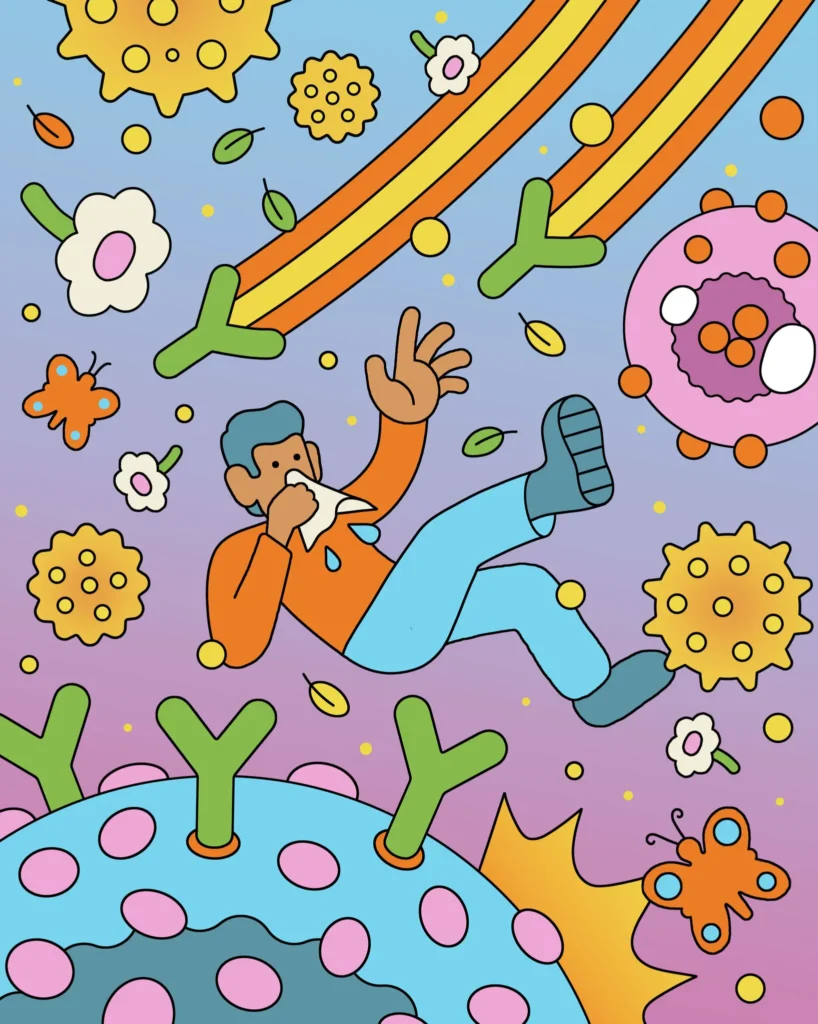
Allergies are miserable. Your eyes water, your sinuses hurt, and your nose somehow turns into both a leaky faucet and a clogged drain.
The culprit? Depending on the season, it’s the trees, grass or weeds releasing pollen into the wind.
Your first allergy attack can seem to come out of nowhere. But in many cases, your immune system has been building toward it for years.
This is sensitization, the process by which your immune system learns to recognize pollen as a threat and arms itself for future attacks.
In total, about a quarter of adults in the United States have seasonal allergies, and they can become sensitized over a single exposure to pollen or over several allergy seasons.
Some people become sensitized in childhood. Others become sensitized after moving and encountering new types of pollen. Sometimes, all it takes is a particularly bad pollen season to push the immune system over the edge.
Most allergies follow the same basic script: The immune system is taught to see something as a threat and then reacts when it shows up again.
Hours after the pollen exposure, white blood cells known as eosinophils arrive as reinforcements and release another wave of inflammatory chemicals. This keeps tissues swollen and mucus flowing, which is why allergy symptoms tend to linger for a while.
All of this can leave you tired and foggy. Congestion makes it harder to sleep and feel rested, and some researchers believe that allergic inflammation can also affect your mood, memory and cognition.
The good news is that allergy treatments can stop your immune system from spiraling out of control. Antihistamines block cells from responding to histamine, which helps reduce allergy symptoms, while steroid nasal sprays quiet the inflammatory signals, helping dial down swelling and congestion. Saline rinses don’t block the allergy response directly, but they can help by flushing out pollen and other irritants from your nose.
Spring, summer and fall each offer different types of pollen, so a change in season can bring relief — or a whole new round of allergies. But even as one allergy season gives way to another, you still have ways to fight back.
- Credits: The New York Times
- Author: Simar Bajaj
- Illustrations: Jackson Gibbs