

It’s good to hear from you again, Reid, Victor, Christina, and Jeremy. For about 40 minutes, no one on Earth knew what exactly what you were doing.
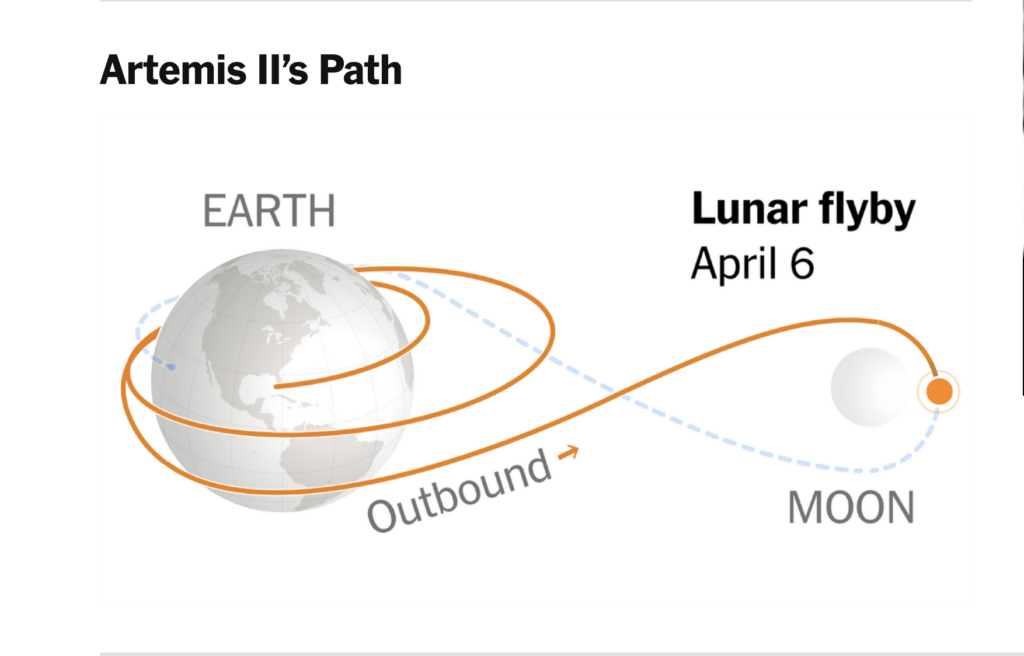
At 6:44 p.m. Eastern time, the crew of NASA’s moon mission Artemis II — three Americans and one Canadian — became the first astronauts in more than half a century to be cut off from the rest of humanity as their spaceship slipped behind the moon, severing radio communications with mission control.
When the spacecraft emerged on the other side of the moon, Mr. Wiseman, Mr. Glover, Ms. Koch and Mr. Hansen reconnected with the rest of humanity, and from their windows, they watched as a thin crescent of sunlit Earth rose above the lunar surface.
“It is so great to hear from Earth again,” Christina Koch, one of the astronauts, said after the crew got back in touch with mission control.
Speaking to the people of Earth, Ms. Koch then described a future when people will regularly go to the moon: “We will explore. We will build. We will build ships. We will visit again. We will construct science outposts. We will drive rovers. We will do radio astronomy. We will found companies. We will bolster industry.”
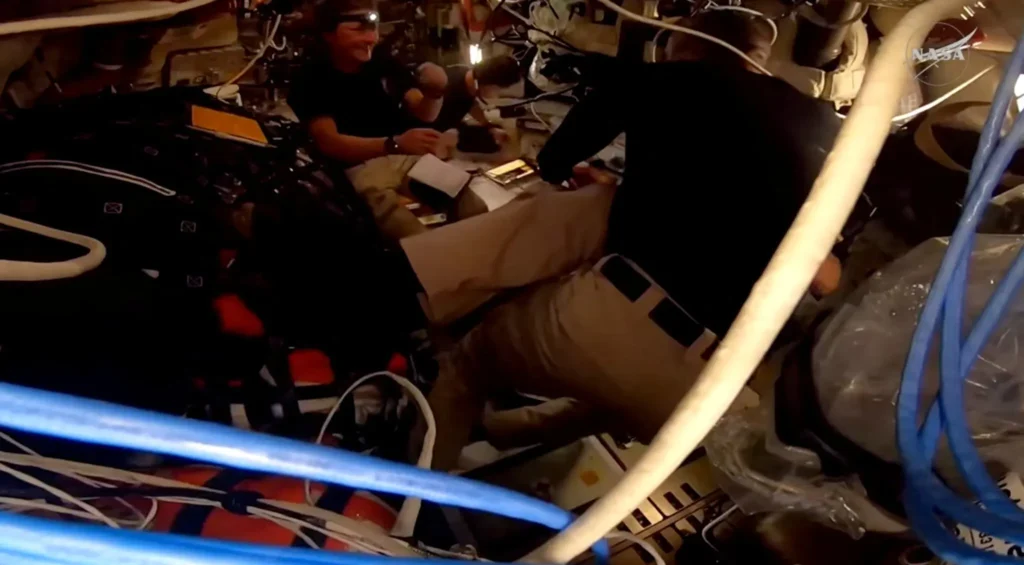
But she ended with, “We will inspire but ultimately, we will always choose Earth. We will always choose each other.”
During their interlude in silence, the astronauts reached their greatest distance from Earth, 252,756 miles. They had already ventured farther from home than any human being who has ever lived, crossing the 248,655-mile distance record set by the Apollo 13 mission in 1970.
The astronauts also reached their closest approach to the moon, 4,067 miles above its surface.
With the slingshot around the moon, the astronauts are now headed back toward Earth and a splashdown on Friday. “You are earthbound, and we are ready to bring you home,” mission control told the astronauts.
Since launching to space on Wednesday, the astronauts of Artemis II have tested life support and other important systems of their Orion spacecraft, the primary purpose of the mission. They have also tangled with the vehicle’s toilet, puzzled over personal computing devices and left low-Earth orbit.
Here’s what else to know.
Keep watching: NASA is streaming live video coverage of the mission 24 hours a day. You can view it on YouTube, X, the agency’s website and its smart TV apps. You can also view it in the video player above.
Looking at the moon: Beginning at 2:45 p.m., the astronauts began detailed observations of features of the lunar surface, including parts of the far side that shrouded in darkness during all of the Apollo missions. Thus, this is the first time that human eyes have seen those parts of the moon.
Bonus eclipse: The astronauts will soon experience a 53-minute solar eclipse starting at 8:35 p.m. They will be able to observe the solar corona from a unique perspective, as well as unusual glimpses of Earth and other planets.

Emotional moment: As the astronauts passed the Apollo 13 distance record, they called down to mission control and proposed naming a crater on the moon’s surface for Carroll Wiseman, the wife of the mission’s commander, Mr. Wiseman, who died of cancer in 2020. The crew embraced as Houston held a moment of silence with Mr. Weisman’s family.
What’s next: Day 7 of the mission will be quieter than earlier days, giving the crew more time to rest. On Day 10, the astronauts will splash down in the Pacific Ocean near San Diego, concluding the Artemis II mission.
They’re having a hard time capturing the view of Earthshine illuminating the moon by itself, sans sun, with cameras.
“After all of the amazing sights that we saw earlier, we just went sci-fi,” said Victor Glover, the pilot. “You can actually see a majority of the moon. It is the strangest-looking thing that you can see so much on the surface.”
- Credits: The New York Times
- Authors: Kenneth Chang & Katrina Miller
- Photo: NASA, via Reuters