
The Supreme Court on Monday blocked a Trump administration plan to dramatically change how Americans vote by mail in the lead-up to the midterm elections, a major loss for President Trump, who has long claimed without evidence that fraud is rampant in mail voting.
The ruling was a resounding win for Democratic-led states and voting rights groups, which had argued that the plan was unconstitutional and an existential threat to the democratic process.
The Trump administration’s efforts, they had said, would introduce chaos and confusion as early voting gears up in many states.
Still, the weekslong legal tussle over the issue may have sown its own kind of confusion, a victory of sorts for Mr. Trump as he seeks to cast doubt on the integrity of the vote in an election his party might lose.
The majority provided a one-paragraph explanation for the ruling, writing that the government was “unlikely to succeed on the merits.”
The order was unsigned, which is typical in emergency rulings. It gave no vote count. Justice Brett M. Kavanaugh wrote a concurrence. Justice Samuel A. Alito Jr. dissented, joined by Justice Clarence Thomas.
The battle over the Trump administration’s plan to change mail-in voting has played out over the last few weeks in a dizzying series of legal developments, even as states began sending out ballots.
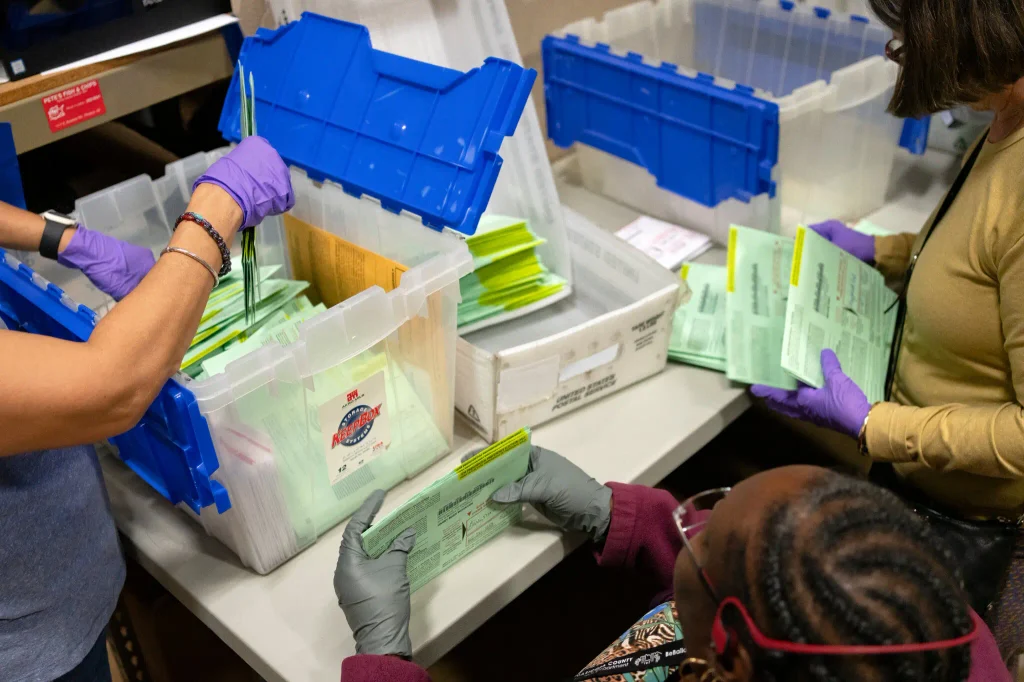
Trump administration lawyers had urged the justices to step in and clear the way for its plan to use the Postal Service to screen ballot envelopes after they are submitted by state elections officials. The new rules would require states to submit lists of voters approved to receive mail ballots. The Postal Service would then deliver mail ballots only to the voters on the lists.
The plan would also require states to use an envelope approved by the Postal Service, including a unique bar code for each voter. Some states have argued that redesigning ballots so close to the election would be challenging or perhaps impossible, causing delays.
- Credits: The New York Times
- Author: Abbie VanSickle
- Photo: Rebecca Noble