

The United States and Iran exchanged strikes for a fifth consecutive day on Wednesday, with both sides showing no sign of backing down as they entered a new stage of the war.
U.S. Central Command, which oversees American forces in the Middle East, said on social media that it launched a new wave of strikes on military targets in Iran. It said it had targeted “coastal defense systems and cruise missile storage and launch sites” on Greater Tunb island in the Strait of Hormuz, as it seeks to degrade Iran’s ability to attack commercial vessels in the critical waterway for oil and gas shipping.
Iran earlier targeted American military facilities in the region, hours after the U.S. military said it had reimposed a naval blockade on Iranian shipping in the waterway, and President Trump scrapped a short-lived plan to impose tolls on shipping in the strait. The U.S. military said it had “redirected” two vessels since restarting the blockade.
The latest strikes, and Mr. Trump’s flip-flops, show that he is struggling to exit a war that he had said would last four to six weeks but has entered its fourth month. The preliminary cease-fire has collapsed, diplomatic efforts have stalled, and the conflict is now focused on control of the strait, which had not been a point of contention before the war.
Iran’s Islamic Revolutionary Guards Corps said on Wednesday that it had launched strikes against U.S. military targets in Bahrain, Jordan and Kuwait, state media reported. There were no immediate reports of damage or casualties.
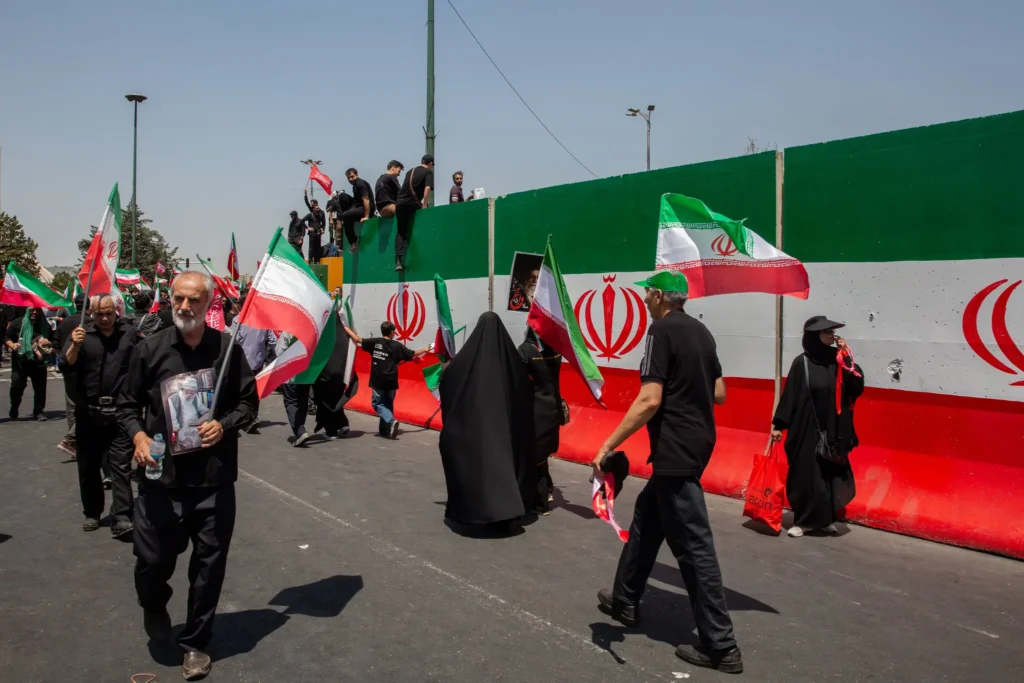
The Jordanian military said it had shot down three Iranian missiles, and Kuwaiti and Bahraini forces said they had intercepted Iranian attacks.
Iranian state media reported on Wednesday that seven members of its army were killed after a U.S. strike on military facilities in the southeast of the country. Fatemeh Mohajerani, an Iranian government spokeswoman, said on social media that the U.S. attacks had also killed more than 30 civilians in recent days. She did not provide further details. Central Command did not respond to a request for comment.
Mr. Trump said on Fox News on Tuesday that U.S. forces would strike Iran “very hard” until Tehran agreed to return to the negotiating table, and could target civilian infrastructure, including power plants and bridges — a potential war crime under international law.
Mr. Trump made the comments hours after walking back a plan he had announced on Monday to charge a 20 percent fee on ships passing through the strait in return for providing security — a practice his administration had previously rejected.
Here’s what else to know:
Strait of Hormuz: The new U.S. naval blockade could have a more devastating impact on oil prices than the first one imposed from April to June, as global oil reserves are lower and ships face heightened risks.
Greater Tunb island: The U.S. military strikes on Wednesday were focused on the territory, which the United Arab Emirates claims and says Iran has occupied illegally. The island is strategically located near the opening of the waterway, aiding Iran’s ability to monitor shipping.
Israel in limbo: Israeli government officials believe a return to full-blown war with Iran is preferable to an agreement that fails to curb the threats they say the country poses. The Israelis fear that another U.S.-Iran deal would not resolve their concerns.
- Credits: The New York Times
- Authors: Ravi Mattu, Qasim Nauman, Eric Schmitt and Jenny Gross
- Illustration: Samuel Granados | Photo: Arash Khamooshi/Polaris